
What the heck is anxiety?

What is anxiety?

The term “anxiety” is thrown about loosely as a “catch-all” descriptor for quite a few feelings: fear, apprehension, worry, panic, etc.  As humans, we demand a lot from our brains–to maintain bodily function, to make significant life decisions, to process information, and to alert us to danger. Genetics, environment, and life’s circumstances combine to determine vulnerability to anxiety and may contribute to the activation of anxiety symptoms under pressure.

Is anxiety harmful?

Not always. As humans we must innately feel alarmed or alerted to potential risks in our environment–a complete lack of worry or fearfulness could be linked with a lack of awareness and as a result, a lack of survival skills. An anxiety-prone individual has the added advantage of generally being sensitive, more empathetic, and in general more attuned to his or her own emotions.  In athletic or academic performance an “ideal” or “optimum” level of anxiety can be key to peak performance, as the individual is alert and ready to take action.

Is anxiety damaging if I don’t do anything about it?

Perhaps. It is commonly known that repeating a behavior will cause that behavior to eventually become a habit. For example, a person who starts a new routine of taking his vitamins with breakfast may over time adapt this ritual into a daily habit. Anxiety-prone individuals may develop the tendency to think automatic, detrimental thoughts (e.g. “I’m going to fail this test” even though the person studied). Also, a person with heightened anxiety or sensitivity may learn over time to react to potential triggers in a manner that is harmful to his or her ability to function optimally and/or enjoy relationships.

How to reduce anxiety

Re-framing thoughts is a concept derived from a variety of therapy techniques (particularly from a treatment modality like Cognitive Behavioral Therapy or CBT). People prone to anxiety seem to struggle to see options outside of their automatic negative thoughts. To re-frame an automatic negative thought, try this re-framing technique:

  • Instead of “I’m going to fail at_______”  try  “I’m having the thought that___________” [e.g. I didn’t prepare enough for this test and I could get a bad grade]”

Anxiety types: cognitive distortions

Anxiety can be categorized into a few more specific descriptions or faulty ways of thinking; one or a combination of the following may apply:

  1. Discounting or ignoring the positive: focusing primarily on the negative events or pieces of a situation, thoughts may crowd out the “light” or positive pieces of a circumstance.
  2. Black and white reasoning: rather than see a “gray area” or simply view a situation as complicated, this anxiety-ridden reasoning style is “all or nothing”.
  3. Catastrophic thinking: everything is viewed as a disaster, even if it’s a controllable circumstance (e.g. car runs out of gas, and becomes the end of the world rather than a fixable inconvenience).
  4. Perfectionist thinking: anxiety symptoms sometimes fuel the false belief (particularly for high achievers) that anything done less than perfect is not worth doing (e.g. “If I can’t get an A on my paper what’s the point?”)
  5. Emotional reactivity (or emotional reasoning): this subcategory is relevant when emotions tend to take over in the heat of the moment and an individual reacts in anger, sadness, or by acting out–beliefs about a set of circumstances may lack reason or rationality.

Can my anxiety symptoms go away? 

Yes, over time and with intention, anxiety symptoms and worry can decrease. A goal in the context of therapy may be to reduce the impact of anxiety on an individual’s daily life. Another goal would be to develop coping skills to reduce the impact of situational anxiety or panic.  A therapy client will work with the therapist to develop a set of “tools” unique to his or her needs to reduce the intensity, duration, and frequency of anxiety symptoms.

Still have questions about anxiety or how therapy can help? 

Please feel free to contact me with questions or about how we can work together to manage your own anxiety and stress.
Bibliography:
Willard, C. (n.d.). Mindfulness for teen anxiety: A workbook for overcoming anxiety at home, at school, and everywhere else.

Comfortable being uncomfortable

Are you an introvert?

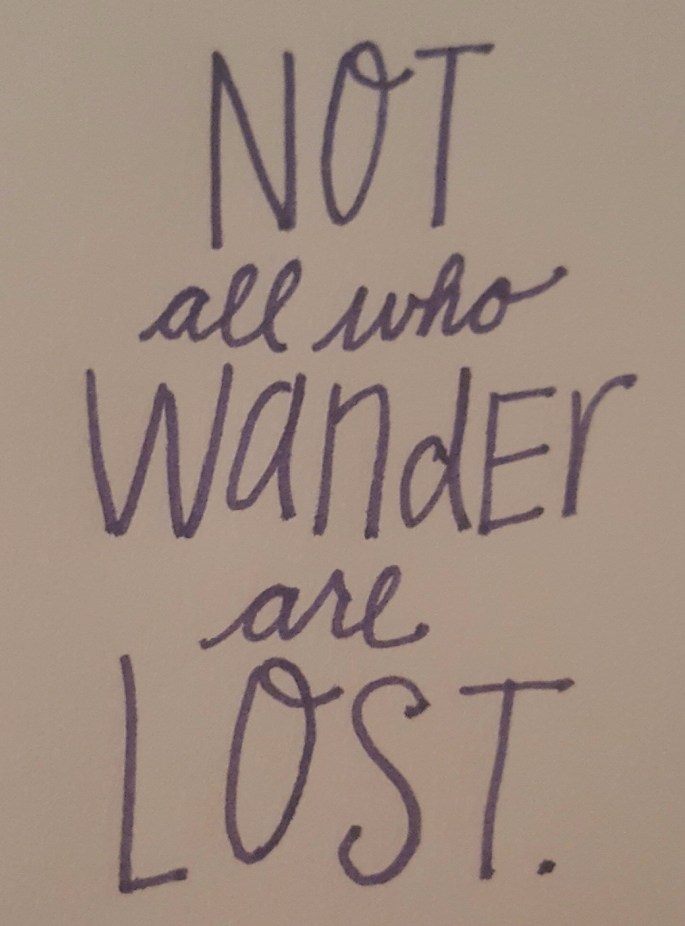
I am an expert solo traveler. I take the “expert” designation seriously, with my budget-friendly international youth hostel memberships and my phenomenal Airbnb guest reviews.  I love the freedom and the decisions I can make independently about how active or restful I want to be. As I write this I’m planning my 10th solo excursion! So stoked for more adventures.

I think the word “travel” paints a picture dependent on your unique reality; often, traveling is an opportunity to see more of the world and expose oneself to a plethora of experiences. And people–it very well may increase interactions with PEOPLE.

I’m an introvert!

Yep. It’s weird because I willingly embrace 25 or more weekly one-on-one planned social interactions, a.k.a. therapy sessions, and I’m introverted. It happens. Conversely, I absolutely need solitude for chunks of time each day to “recover” from my social and work life!

I have enjoyed my introversion for the strengths that accompany the label the past few years, but I didn’t always see my perceived awkwardness as a positive trait. Growing up, the idea of novel social situations made me nauseous. Made me bite my nails and cease all talking–I’d freeze and my thoughts would race. I remember planning in advance what I’d say in class should my high school teachers call on me. I remember keeping to myself and assuming the “peaceful observer” role I had mastered. It still happens sometimes.

Introversion and the possibility of meeting new people–but how does that work?? Solo restaurant reservations, unattached walking treks in LA or Chicago, or unaccompanied baseball games invite a plethora of unplanned social interactions that could render the typical introvert paralyzed with angst. And how awkward, right? I remember mentally preparing to defend my “aloneness” to strangers, praying that I wouldn’t need to ask anyone for help with something because that could be terrifying.

In July 2009 I was a solo-travel baby when I booked a flight to Boston–I attended some scheduled Independence Day events but otherwise explored without an agenda. If you know me well, you know I operate based on an intensely-structured calendar, planned hour to hour (#therapylife). I’ve since flown several times to the West Coast where I’ve rented a car and ventured north or south along the coast (I’ve covered all of Route 1 from Seattle to San Diego!) to hang out in the large metro areas of LA and San Francisco–contrasted by peaceful jaunts into the Redwood Forest and underrated vineyards in Monterey County, CA. I’ve driven loops around the Midwest to check out the Windy City, Memphis to visit family, and St. Louis for ballgames.

I befriended a fellow guest last spring at my Airbnb in Salinas, CA.  She had started temp work at an organic farm nearby; I’d commented on her boldness for starting a job in a place she’d never been. Her response was simple but has resonated:

“I’m becoming comfortable being uncomfortable”.

Whoa. I sat on this idea for a while. I reflected on my own adventures and the opportunities I created through solo travel. Yeah, I sought out some shareable Insta-worthy highlights, started a goal to visit all 30 MLB ballparks (I’m at 14), and honed my clumsy repertoire of conversation starters. That’s all good stuff.

But more importantly, I have gained a new boldness that I can only attribute to stepping outside my comfort zone multiple times, to gather wisdom about myself and my place in the world. I’ve boarded planes/ferries/trains/Ubers, asked for help (me?!!), and offered to share tables in coffee shops. I’ve felt humbled over and over again. I’m able to sit awkwardly with myself and embrace it for what it is… at that moment. I’ve developed security with my identity and growing ability to venture beyond my home base, beyond the familiar. And I think that’s pretty freaking empowering.

Am I still an introvert? Definitely. I still need “recharge” time each day, still, need to allow myself grace to adjust to new situations. And that’s okay, you know?

How to break from routines

I would encourage you to seek ways to break routine on occasion, to get a taste of comfort in being uncomfortable: with travel, trying new food, asking for assistance in a store. The change doesn’t have to be monumental–it could even be therapeutic. How will you do it?

Have an amazing day, friends!

20170924_202950.jpg

Rychel

High-Functioning Anxiety: Slipping Under the “Anxiety Radar”, Perfectionism

High Functioning Anxiety

In my previous entry, I wrote about anxiety–pros and cons, types, and goal-setting for symptom management. I currently have therapy clients, family members, and friends in the midst of “seasons of transition” (moving, pregnancy, beginning a new job, starting college, etc.), and ANXIETY is a hot topic as a result.

Below is the link to an article from The Mighty, a resource outlining the everyday struggles and triumphs of people living with disability, mental illness, and/or chronic illness. The report features High Functioning Anxiety–a subcategory of anxiety.

Compared to other types, high-functioning anxiety (HFA, for the sake of my slow typing) is a different ballgame: often it’s undetected by parents, teachers, and peers as the individual can be high-achieving, academically successful, have above-average social skills, and maintain consistent employment.

I’ve had the opportunity to work with a variety of clients I would place into this category–I love working with HFA clients to learn how unique perspectives in achievement and life add to the person’s present level of functioning. In addition, HFA individuals are generally highly invested clients on my caseload and very motivated to work during time dedicated to therapy.

Check the article out for yourself:

http://themighty.com/2016/06/living-with-high-functioning-and-hidden-anxiety/